
We've all been there at some point, reading a pattern that says Bulky, Fingering... and thinking it's some kind of secret code among expert knitters, from a secret organization. But the truth is, it's simpler than it seems, which is why we've created a buying guide and explanation of the different yarn weights.
What types of yarn weights are there?
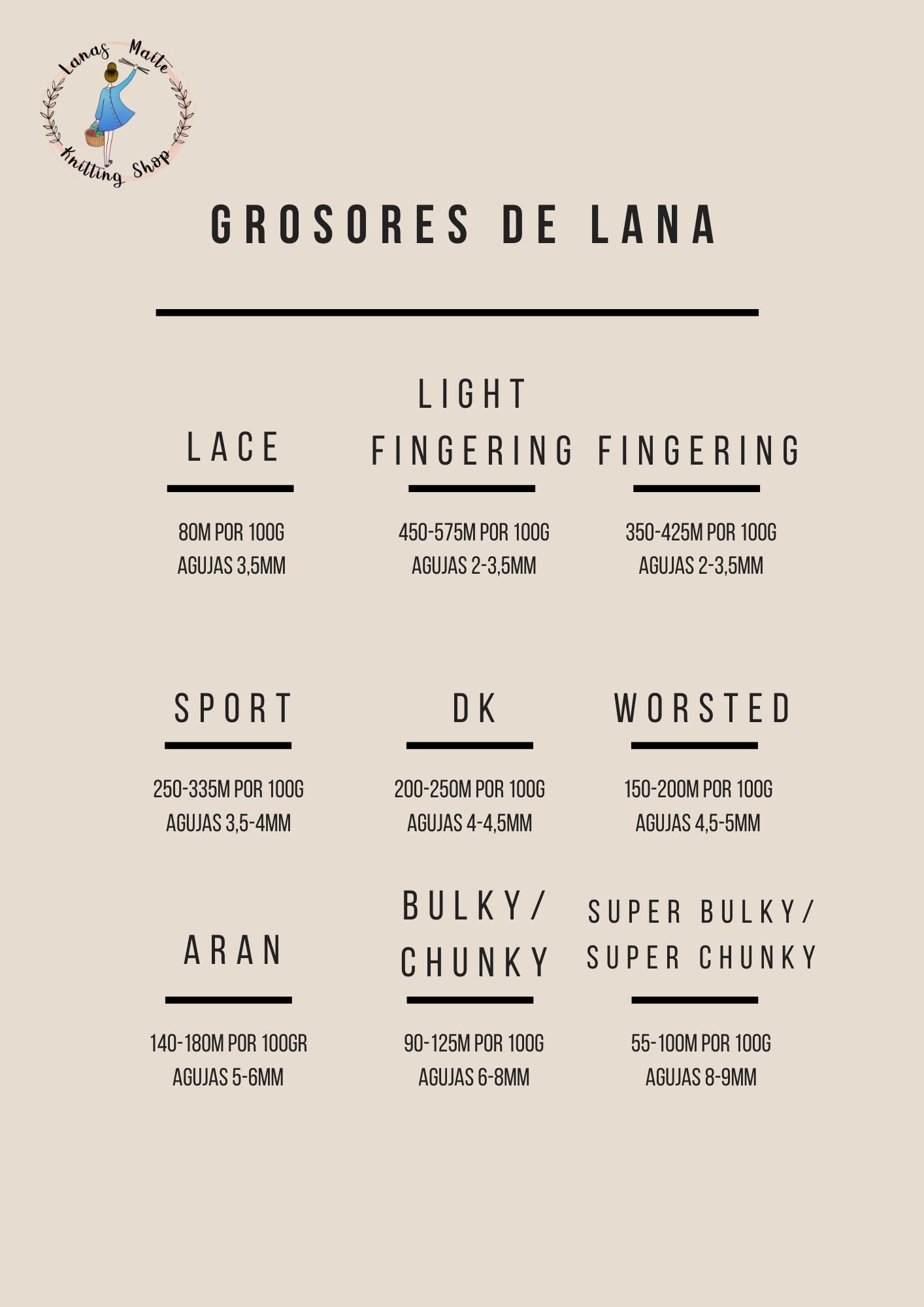
Yarn categorization is promoted by two variables: fiber length per 100 grams and the recommended needle size. Based on this, we will divide yarns into 9 thicknesses. See the table below.
FINE WOOLS
YARNS LIGHT FINGERING


YARNS LIGHT FINGERING
FINGERING YARNS
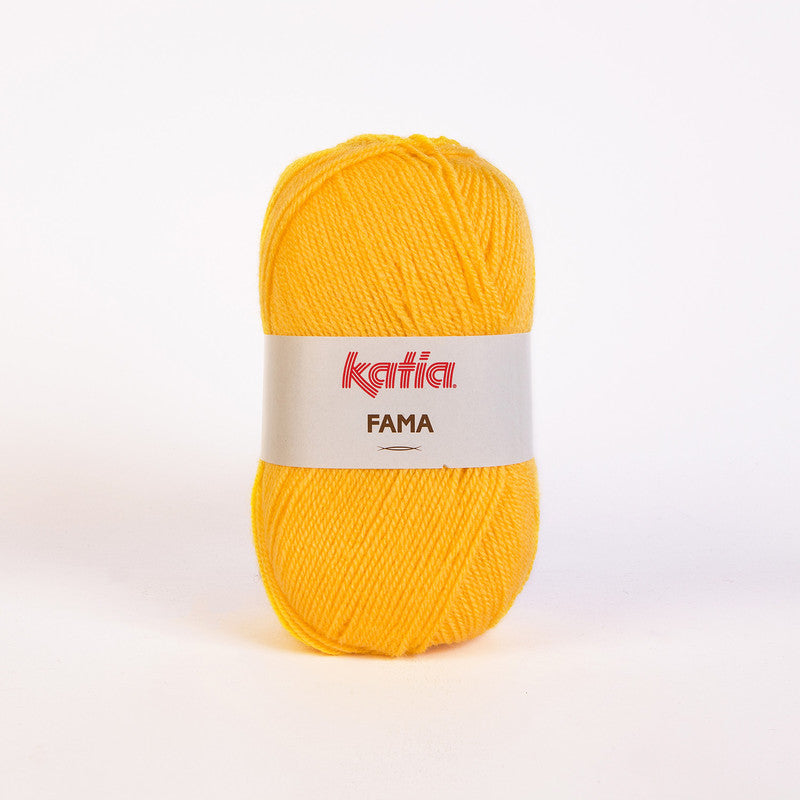
FINGERING YARNS
REGULAR WOOLS


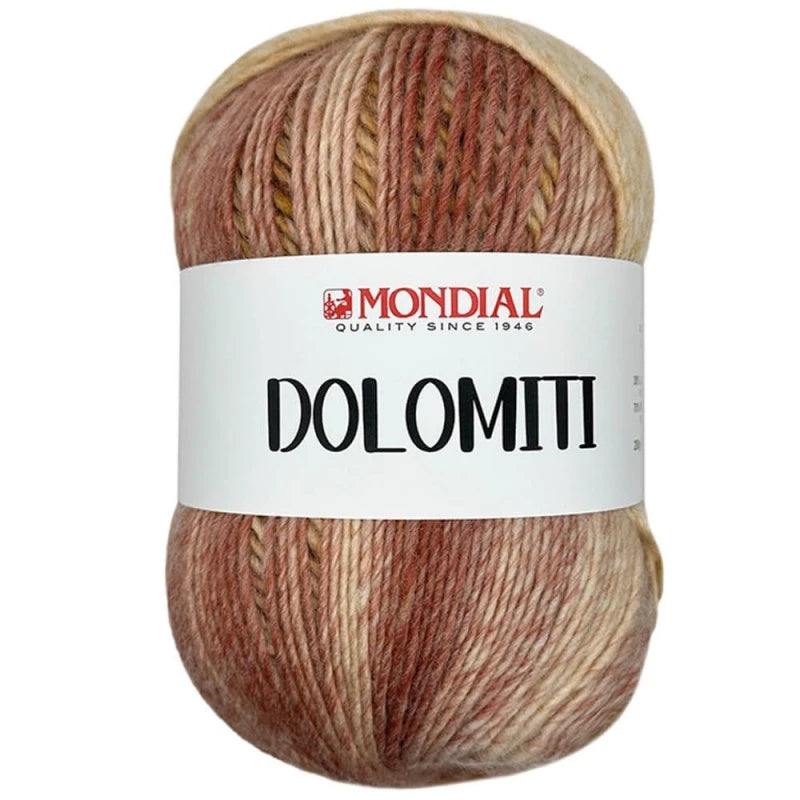
THICK YARNS
ARAN WOOLS
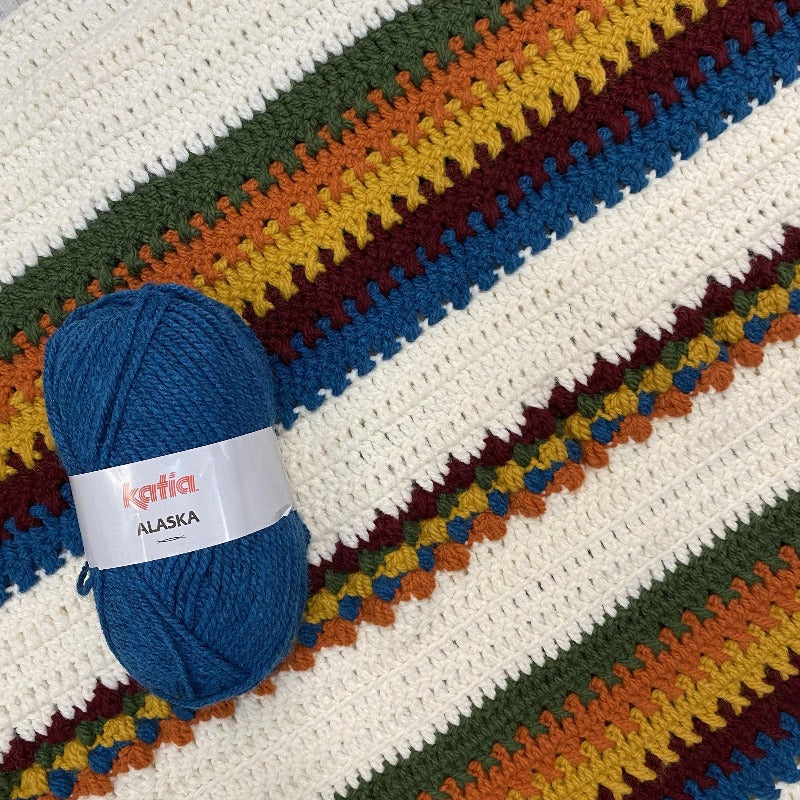
ARAN WOOLS
BULKY / CHUNKY YARNS
BULKY / CHUNKY YARNS
SUPER BULKY / SUPER CHUNKY YARNS


SUPER BULKY / SUPER CHUNKY YARNS
More Data on Yarn Thickness
How to tell the thickness of yarn?
Usually, all yarn brands indicate the needle size, weight, and length of the ball. With this information and the image above, you will know what thickness you will be working with. If, for any reason, you don't know these variables, you can always measure the yarn and its strand length to determine its thickness.
What is the thickest wool called?
The thickest yarn is called Super bulky or Super Chunky. These are skeins that are knitted with size 8-9 needles, and for every 100g, we have about 55-100 meters.
What can be knitted with thin yarn?
We usually use thin yarns for the little ones at home, but we've seen almost everything knitted, jackets, shawls, cutout dresses... But on the RAVELRY page you can find endless free patterns to knit.
Which needle to use depending on the yarn thickness?
At the top, there is an image showing which needles to use depending on the thickness of the yarn. However, remember that all yarn balls indicate the approximate needle size you should use